Blog

  • Neurogenics in Motion: Training the Brain-Body Connection

    If there’s one concept that sets an athlete apart, it’s this:

    Train the brain as much as the body.

    In today’s performance world, most people still train like it’s the 1990s—chasing muscle, chasing speed, chasing numbers. But here’s what they’re missing:

    The brain drives movement.
    The nervous system runs the show.
    And without training the brain-body connection, you’re never unlocking full potential.

    That’s why I created the system we call Athletic Neurogenics—where cognitive function and physical performance grow together.

    Let me explain how it works.


    What Is Athletic Neurogenics?

    Athletic Neurogenics is the intentional integration of movement and cognitive stimulus. It’s grounded in neuroscience and designed to improve:

    • Brain-body communication
    • Motor control and coordination
    • Reaction time and decision-making
    • Spatial and rhythmic awareness
    • Emotional regulation and adaptability

    It’s not just about how hard you train.
    It’s about how smart your body becomes while doing it.

    We use it across all populations:

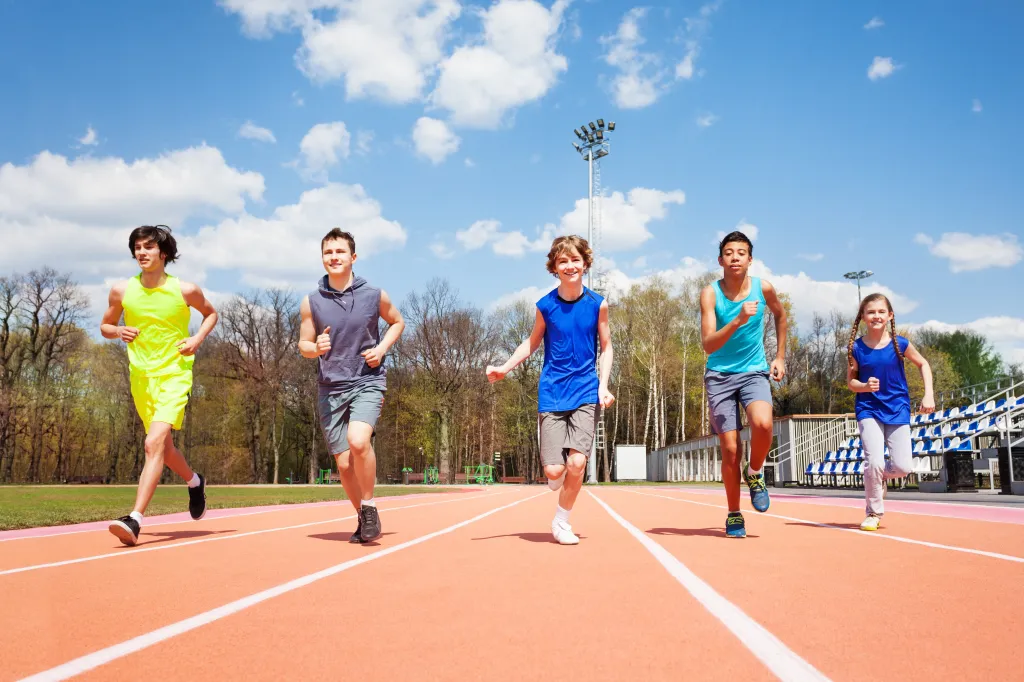
    • Young athletes developing motor control
    • Injured athletes retraining patterns post-trauma
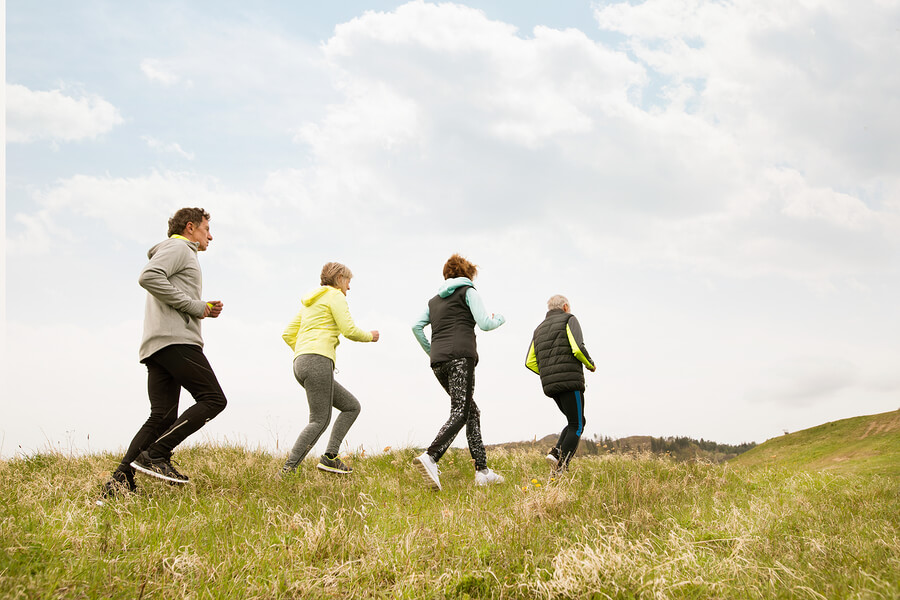
    • Adults over 30 protecting brain function through movement
    • Elite performers looking for a competitive edge

    This is performance from the inside out.


    Why Movement Alone Isn’t Enough

    Most people train for muscle and movement. But here’s the truth:

    You can move without thinking. But you can’t perform without processing.

    Whether you’re sprinting down a field, adjusting your balance on a trail run, or reacting to a change in tempo in a rehab drill—your brain has to make real-time decisions.

    If your system is lagging—physically or cognitively—performance breaks down.

    That’s why we integrate cognitive tasking into movement:

    • Call-and-response drills
    • Pattern recognition and rhythm sequencing
    • Reactive change-of-direction work
    • Novel movement skills that challenge coordination
    • Eye tracking, visual stimulus, and proprioceptive demands

    And here’s the kicker—when you combine novelty, precision, and timing in movement, the brain gets stronger.


    Neuroplasticity: Rewiring Through Movement

    Every time you learn a new skill or perform a complex task under pressure, your brain forms new neural pathways.That’s the essence of neuroplasticity—your brain’s ability to change, adapt, and grow through experience.

    When you apply neuroplasticity to physical training, you get:

    • Smarter movement
    • Faster learning curves
    • Better motor control
    • Stronger emotional regulation under stress
    • Delayed cognitive decline with age

    That’s why I say this system isn’t just for athletes—it’s for everyone.

    It protects the brain.
    It elevates performance.
    It restores confidence in movement.


    Real-Life Applications

    For athletes:
    Improved processing speed, adaptability, sport vision, and performance under pressure.

    For rehab and RTP:
    Restores proprioception, corrects compensations, and rebuilds trust in the system.

    For adults 30+:
    Enhances balance, reaction time, and brain health—while keeping movement novel and engaging.

    For youth:
    Supports brain development through skill exploration and coordination sequencing.

    This isn’t “extra.” This is the core of how humans perform and sustain health over a lifetime.


    What It Looks Like in Training

    Here are some simple examples we use:

    • Pogo hops while spelling a word backward
    • Lateral shuffle responding to verbal or visual cues
    • Marching in rhythm while clapping to an offbeat tempo
    • Performing lunges while tracking an object with the eyes
    • Change-of-direction drills based on external stimuli

    These drills challenge the body—but more importantly, they challenge the brain’s role in movement.


    Why It Matters Now More Than Ever

    We live in a world that encourages passive input.
    Screens dominate attention. Movement is shallow. Thinking is distracted.

    Athletic Neurogenics flips that script.

    It builds presence. Precision. Processing.
    It reawakens the body’s potential through the nervous system.
    It develops focus, speed, and adaptability in real time.

    Whether you’re returning from injury, rebuilding coordination, or optimizing elite performance—train the brain-body system. Always.

  • The Three Big Rocks of Aruka Performance

    By Coach J

    If you’ve been following this series, you know by now—we don’t chase trends at Aruka. We build principles, not just programs.

    And when it comes to performance development—whether you’re an athlete, a coach, or someone trying to move better and live longer—you need a solid foundation.

    I call that foundation The Three Big Rocks of Aruka Performance:

    1. Skill Mastery
    2. Bio-Motor Ability Enhancement
    3. Movement & Athletic Neurogenics

    These aren’t just concepts. They’re the pillars that hold up everything we do—from training and return-to-play, to longevity and youth development.

    Let me walk you through each one.

    Big Rock #1: Skill Mastery

    Skill is the gateway to performance. Period.

    I’ve said it before, and I’ll say it again – while a certain amount of stability and strength are needed to gain and improve skills —skill must come before strength, speed, or load program emphasis. If you can’t move well, you won’t train well. And if you don’t train well, you won’t last.

    That’s why Aruka starts by teaching and restoring what I call the Movement Skills for Life:

    Balance, Walk, Run, Sprint, Jump, Skip, Hop, Shuffle/Slide, Throw, Catch, Strike, Kick

    These aren’t just for kids. They’re the foundation of everything from elite-level sprinting to everyday mobility.

    We assess many of these skills along with important fitness skills through our Movement IQ Screen. We identify gaps, then rebuild movement confidence with intentional drills, corrective strategies, and skill coaching.

    Skill is the great equalizer—it benefits the young and the aging, the strong and the broken. When you master skill, everything else becomes more powerful.

    Big Rock #2: Bio-Motor Ability Enhancement

    Once skill is solid, now we develop the engine.

    Bio-motor abilities are the raw performance traits that every human possesses—and every athlete must refine:

    • Strength
    • Endurance
    • Speed
    • Power
    • Agility
    • Coordination

    But here’s the catch: These traits are only valuable when they’re expressed through movement.

    It’s not enough to be strong—you must move strong.
    It’s not enough to be fast—you must move fast with control.

    At Aruka, we train athletes to display these abilities in all three planes of motion—sagittal, frontal, and transverse—because life and sport don’t happen in a straight line.

    We integrate these qualities into both performance and recovery programs, using structured progressions, individualized dosing, and—always—proper skill execution.

    Big Rock #3: Movement & Athletic Neurogenics

    This is the Aruka differentiator.

    Most training systems focus on muscles.
    We focus on brains and bodies—together.

    Athletic Neurogenics is our brain-body training model that combines:

    • Movement patterns
    • Cognitive tasking
    • Novel coordination drills
    • Skill sequencing
    • Decision-making and timing challenges

    It’s neuroplasticity in motion—designed to:

    • Sharpen coordination
    • Build new neural pathways
    • Improve rhythm and reaction
    • Enhance adaptability
    • Boost mental engagement

    This system is powerful for:

    • Youth developing motor control
    • Injured athletes rebuilding brain-body trust
    • Aging adults seeking cognitive longevity
    • High performers refining their edge

    And here’s the truth: If your training isn’t training your brain, it’s leaving performance on the table.

    Why These Rocks Matter

    These three Big Rocks work together, not separately.

    • Skill without bio-motor development is limited.
    • Bio-motor power without skill is risky.
    • And both without neurogenics? You’re training the body—but not the system that controls it.

    Performance That Lasts

    Anyone can push hard for six weeks.
    But that’s not what we’re after.

    We’re building:

    • Lifelong movers
    • Injury-resistant athletes
    • Confident, coordinated individuals
    • People who feel free and capable in their own bodies

    And we do that by honoring the Three Big Rocks.

    Skill makes you efficient.
    Power makes you dangerous.
    Neurogenics makes you adaptable.

  • The Movement Crisis: Understanding and Fixing Dysfunction

    By Coach J

    We’re facing a crisis.

    Not one that gets breaking news headlines… but one that’s quietly stealing health, performance, and freedom from millions of people every day.

    It’s the movement crisis—and it’s real.

    As a coach who’s worked with elite athletes, everyday movers, and those recovering from injury, I’ve seen it firsthand: people are losing the ability to move well. And without movement, everything else in health starts to fall apart.

    What Exactly Is Movement Dysfunction?

    At Aruka, we define movement dysfunction simply as this:

    Movement performed with biomechanical inefficiencies—making it flawed, unstable, or dangerous.

    Now, here’s the thing: most people are still moving… they’re just moving poorly. And that poor movement slowly chips away at the body—causing wear, pain, compensation, and eventually injury.

    You don’t notice it at first. But over time, it shows up as:

    • Recurring pain
    • Stiffness
    • Loss of mobility
    • Muscle imbalances
    • Decline in performance

    You can be strong, fast, and even fit—and still be moving dysfunctionally.

    Where Does Dysfunction Come From?

    There are two main culprits:

    1. A lack of proper learning.
      Most people never received real movement education. No one taught them how to squat, run, skip, or throw with mechanics that preserve joint integrity and performance. Instead, we develop habits that feel right—but are wrong.
    2. Compensatory patterns from pain, injury, or trauma.
      When pain shows up, the brain goes into protection mode. It changes how we move to avoid discomfort—but that new pattern isn’t efficient or sustainable. These “survival” strategies turn into dysfunction that sticks.

    In my experience, nearly everyone carries some form of dysfunction—whether they’re a 14-year-old athlete or a 60-year-old executive.

    Modern Life Makes It Worse

    The 21st century isn’t helping us.

    We sit too much, move too little, and stare at screens more than we interact with our own bodies. Most of our “exercise” is crammed into short blocks of time, disconnected from real movement literacy.

    The result?

    • Tight hips
    • Weak glutes
    • Poor posture
    • Low energy
    • Joint degeneration
    • Compensations built on top of compensations

    We’ve normalized dysfunction. But just because it’s common doesn’t mean it’s healthy—or acceptable.

    That’s Why We Assess

    At Aruka, we don’t jump into workouts.
    We start with assessment.

    We use tools like:

    • Movement IQ Screens to evaluate the 12 Movement Skills for Life
    • Injury Risk Analysis to identify red flags before they become problems
    • Dynamic movement testing to see how the body behaves under real conditions

    Assessments help us answer one critical question:

    “Where is this person breaking down?”

    Because if we don’t find that answer—we’re just guessing.
    And when you guess with human movement, people get hurt.

    Motion Therapy: My Answer to Dysfunction

    Once we’ve identified the breakdowns, we don’t throw cookie-cutter solutions at people. We use Motion Therapy—a system I developed over years of working with performance and rehabilitation professionals.

    Motion Therapy is made up of three key components:

    1. Corrective Exercises – Precise drills to reteach movement and rewire poor habits.
    2. Therapeutic Interventions – Used alongside health pros when needed to address pain, inflammation, or tissue restrictions.
    3. Mobilizations – Techniques to restore range of motion, glide, and joint health.

    This isn’t rehab for rehab’s sake. This is rebuilding for long-term performance.

    This Isn’t Just for Injured Athletes

    If you’re thinking this only applies to athletes recovering from injury—think again.

    I’ve used this approach with:

    • Grandparents who want to get on the floor and play with their grandkids
    • Executives trying to avoid another back flare-up
    • Teenagers dealing with chronic tightness
    • Lifters who can’t squat without knee pain

    Dysfunction is everywhere. But here’s the good news:

    So is the solution.

    Let’s Restore What Was Lost

    I named this system Aruka because it comes from the Hebrew word Arukah—which means “to rebuild and restore.” That’s exactly what we do when we uncover and fix movement dysfunction.

    We don’t just want people to survive movement.
    We want them to master it.
    We want them to feel free, capable, and confident in their own bodies.

    What’s Next?

    In the next article, I’ll take you deeper into Motion Therapy—how it works, why it works, and how we use it to restore people’s lives from the ground up.

    Until then, take an honest look at how you move.
    Don’t wait for pain to tell you something’s wrong.

    Let’s rebuild and restore—together.

  • Rebuilding Skill: The Foundation of Human Performance

    By Coach J 


    When we talk about performance—whether it’s athletic, recreational, or everyday movement—we have to begin with one critical word:

    Skill.

    At Aruka, I define skill as the learned power of doing something competently. It’s not about raw talent—it’s about mastery earned through practice, presence, and precision. It’s about being able to move your body with intention, control, and confidence.

    Without skill, strength is incomplete.
    Without skill, speed has no direction.
    Without skill, endurance becomes inefficiency.

    So at Aruka, we rebuild.
    And we restore.

    Movement Skills for Life

    Over the course of my coaching career, I’ve watched people chase fitness goals—lift heavier, run faster, train harder—without ever learning how to move well. That’s why Aruka focuses on what I call the Movement Skills for Life:

    Balance, Walk, Run, Sprint, Jump, Skip, Hop, Shuffle/Slide, Throw, Catch, Strike, Kick

    These 12 skills form the foundation of all human movement. They’re the building blocks of performance, coordination, and long-term physical health. Most of us learned them as kids—often incorrectly. All of these can be viewed as perishable skills.  In other words, if you don’t use them, you lose them.  This is the current state of many adults.  

    The Truth About Skill Breakdown

    Let’s be honest—21st-century living isn’t built around movement. It’s built around comfort, convenience, and screens. The result? Skill breakdown.

    We don’t move because we can’t move well.
    And we can’t move well because no one ever taught us how.

    This is more than just a movement issue. It’s a health issue.

    Poor skill execution leads to:

    • Joint and tissue breakdown
    • Chronic injury patterns
    • Loss of coordination and brain-body connection
    • Decreased confidence and physical freedom

    That’s why I believe skill development is non-negotiable—for kids, adults, athletes, and everyone in between.

    Skill Must Come Before Strength

    Before you load a squat bar, before you jump into high-intensity workouts, you need to ask a simple question:

    Can I move well?

    Most people never ask it. Most programs never address it. But at Aruka, this is where we start. Skill-first programming is our foundation.

    When skill is present:

    • Strength becomes safer and more effective
    • Endurance becomes purposeful
    • Speed becomes functional
    • Recovery becomes faster

    Skill isn’t optional. It’s the currency of performance.

    Assessing Movement IQ

    We don’t guess at Aruka—we assess.
    That’s why we use the Movement IQ Screen, a tool I created to evaluate your ability to perform the Movement Skills for Life.

    These screens help us:

    • Detect movement dysfunction
    • Uncover asymmetries
    • Pinpoint inefficiencies
    • Create personalized plans for rebuilding

    When your Movement IQ rises:

    • Pain drops
    • Confidence rises
    • Performance improves

    And I’ve seen it happen across every population—from elite athletes to those just trying to reclaim the ability to move freely again.

    Skill Builds the Brain Too

    This isn’t just about muscles—it’s about your mind.

    Every time you learn or improve a movement skill, your brain is actively creating and strengthening neural pathways. This is neuroplasticity in action—the rewiring of your brain through physical learning.

    I call this integration Athletic Neurogenics:
    A system that brings skill, cognition, and movement together.

    It’s especially powerful for:

    • Youth developing coordination
    • Adults recovering from injury
    • Older populations seeking longevity
    • Athletes sharpening their edge

    Skill Is for Everyone

    It doesn’t matter who you are or where you’re starting.
    If you’re a 10-year-old learning to move, a 35-year-old trying to reclaim your health, or a 60-year-old preparing for the next chapter—

    Skill is your foundation.
    And foundation is what we rebuild.